
Fire and Ice Zoas
Zoanthus gigantus
Saltwater Coral
Species Group: Zoanthid
Family: Zoanthids
Log in or create an account to add this species to your tanks.
Water parameters
Temp
76-80 F
Temperature
Maintaining a stable and appropriate temperature is critical for the survival of aquatic life.
pH 7.8 - 8.4 potential of HydrogenMeasuring the acidity or alkalinity of water on a 0–14 scale, where 7 is neutral, 7 is alkaline.
NO3 1-20 ppm NitrateWhile less toxic than ammonia, high nitrate levels (above 40–80 ppm) are important to monitor because they can cause fish stress, stunted growth, and harmful algae blooms.
NO2 <0.0001 ppm NitriteIt is a highly toxic, intermediate compound in the nitrogen cycle produced from broken-down ammonia
PO4 0.01 - 0.1 ppm PhosphateIt is essential for plant development but must be managed, as excess levels trigger nuisance algae blooms and inhibit coral calcification.
NH3 <0.1 ppm AmmoniaIt is the primary killer of aquarium fish, causing gill damage, stress, and death
Ca 380 - 450 ppm CalciumSupporting the growth, skeletal structure, and shell formation of corals, mollusks, crustaceans, and coralline algae
KH 8 - 12 dKH AlkalinityIt acts as a shield, neutralizing acids to prevent dangerous pH "crashes" that can harm fish, corals, and plants.
Mg 1200 - 1400 ppm MagnesiumIt enables coral growth by supporting skeletal formation, assists in metabolic processes, and ensures that calcium is available for corals, clams, and coralline algae.
SG 1.023 - 1.026 SG SalinityEssential for maintaining stable, natural water parameters, proper osmoregulation, and stress-free environments for marine fish and corals
ORP 250 - 400 mV Oxidation-Reduction PotentialA higher positive mV indicates clean, oxygen-rich water with high water quality, while low readings indicate high pollution.
About Fire and Ice Zoas
General information
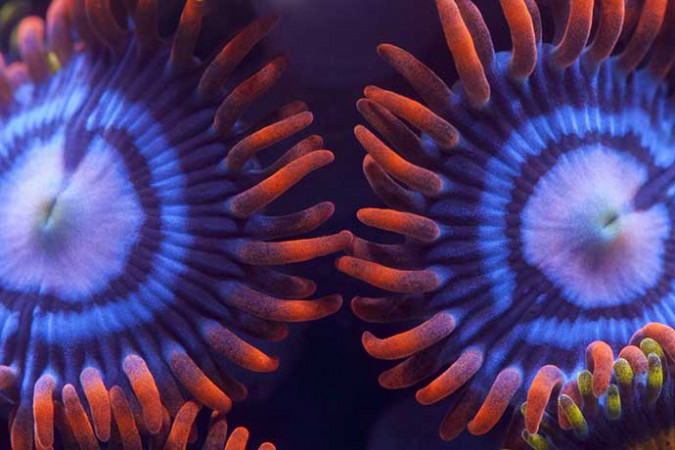
Fire and Ice Zoas (Zoanthus sp.) are a beautiful species of Zoanthid that have brilliant steel blue and red coloration. With its easiness to care and feed, it is an excellent choice for beginner reef aquarists. Many of them caught from deeper locations on the reef. The environment of deep reef species is often challenging to reproduce in the aquarium environment completely. However, in the case of Fire and Ice Zoas many hobbyists have had success by placing them lower in the aquarium in a location that receives strong but filtered lighting.
Fire and Ice Zoas also tend to do better when kept at more moderate water temperatures ranging from 72° to 76° F. These conditions are recommended as a good starting point when first introducing this species to the reef aquarium. Given time and gradual adjustments, hobbyists should be able to identify the ideal location in which to keep Fire and Ice Zoas in their reef aquarium.
Determining sex
Zoanthus gigantus are not batch spawners
Breeding & spawning
Requires moderate light levels combined with medium water movement within the aquarium.
Origination
Indo-Pacific including Fiji, Tonga, Solomon Islands, and the Great Barrier Reef.
Cautions
Some Zoanthids and Palythoa contain a powerful neurotoxin called palytoxin which can be extremely harmful if it comes in contact with your blood stream. Take special care handling polyps and avoid handling if you have an open cut on your hands. When handling any type of polyp make sure to wear gloves and protective eyeglasses.
Acclimation process
Zoanthus gigantus have a wide range of habitat. They are naturally found in estuaries, lagoons, brackishwater areas up to the edges of the reef. So before placing them on a saltwater tank, it is best that your acclimation starts on brackishwater with salinity ranging from 20 - 22 ppt and slowly increasing it to your ambient tank salinity.
All photos
Tap a photo to open the gallery viewer.