
Space Invader Pectinia
Pectinia sp
Saltwater Coral
Species Group: Pectinia
Family: Pectiniidae
Log in or create an account to add this species to your tanks.
Water parameters
Temp
76-80 F
Temperature
Maintaining a stable and appropriate temperature is critical for the survival of aquatic life.
pH 7.8 - 8.4 potential of HydrogenMeasuring the acidity or alkalinity of water on a 0–14 scale, where 7 is neutral, 7 is alkaline.
NO3 1-20 ppm NitrateWhile less toxic than ammonia, high nitrate levels (above 40–80 ppm) are important to monitor because they can cause fish stress, stunted growth, and harmful algae blooms.
NO2 <0.0001 ppm NitriteIt is a highly toxic, intermediate compound in the nitrogen cycle produced from broken-down ammonia
PO4 0.01 - 0.1 ppm PhosphateIt is essential for plant development but must be managed, as excess levels trigger nuisance algae blooms and inhibit coral calcification.
NH3 <0.1 ppm AmmoniaIt is the primary killer of aquarium fish, causing gill damage, stress, and death
Ca 380 - 450 ppm CalciumSupporting the growth, skeletal structure, and shell formation of corals, mollusks, crustaceans, and coralline algae
KH 8 - 12 dKH AlkalinityIt acts as a shield, neutralizing acids to prevent dangerous pH "crashes" that can harm fish, corals, and plants.
Mg 1200 - 1400 ppm MagnesiumIt enables coral growth by supporting skeletal formation, assists in metabolic processes, and ensures that calcium is available for corals, clams, and coralline algae.
SG 1.023 - 1.026 SG SalinityEssential for maintaining stable, natural water parameters, proper osmoregulation, and stress-free environments for marine fish and corals
ORP 250 - 400 mV Oxidation-Reduction PotentialA higher positive mV indicates clean, oxygen-rich water with high water quality, while low readings indicate high pollution.
About Space Invader Pectinia
General information
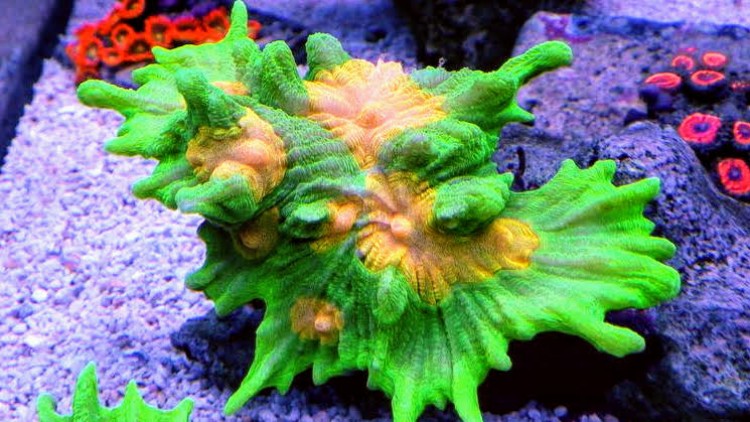
In general, corals coming from the genus Pectinia has a foliose type of coral growth. They usually form cabbage-like colonies with branches that are ruffled and terminate their edges with very sharp points.
For the Space Invader Pectinia, they are predominatly colored green and yellow. This are the water parameters for cultivating Space Invader Pectinia:
- Calcium: 380 – 430 ppm
- Alkalinity: 3.2 – 4.8 MEQ/L
- Phosphates: 0
- Magnesium: 1200 – 1350
- Strontium: 8 – 10
- Temperature: 74° – 82° F (23° – 27° C)
- Salinity / Specific Gravity: 1.023 – 1.025
Diet & nutrition
The Space Invader Pectinia gets much of its nutrition from the symbiotic zooxanthellae living within their tissues. However, we still recommend you do supplemental feeding by adding mysis and brine shrimp.
Determining sex
A mature tank is recommended in cultivating Space Invader Pectinia. They are highly adaptive that it can grow and encrust any surface, including the glass component of your tank.
Breeding & spawning
The Space Invader Pectinia requires moderate lighting and low to moderate waterflow. If they are exposed to strong waterflow, their tentacles wiill not go out, which in turn, will deprive them from feeding.
Diseases
The Space Invader Pectinia are prone to brown jelly infection, especially if water conditions are not met and maintained.
Origination
The Space Invader Pectinia can be found in the waters of the Indo-Pacific Ocean. They are now classified as a vulnerable species and is listed under Appendix II of the CITES list, which means that their international trade is monitored.
Cautions
The Space Invader Pectinia has an aggressive behavior. Therefore, proper spacing must be maintained with regards to nearby corals.
Acclimation process
The Space Invader Pectinia are purely marine, therefore, salinity must be maintained thoroughly at 1.023 to 1.025 specific gravity.
All photos
Tap a photo to open the gallery viewer.