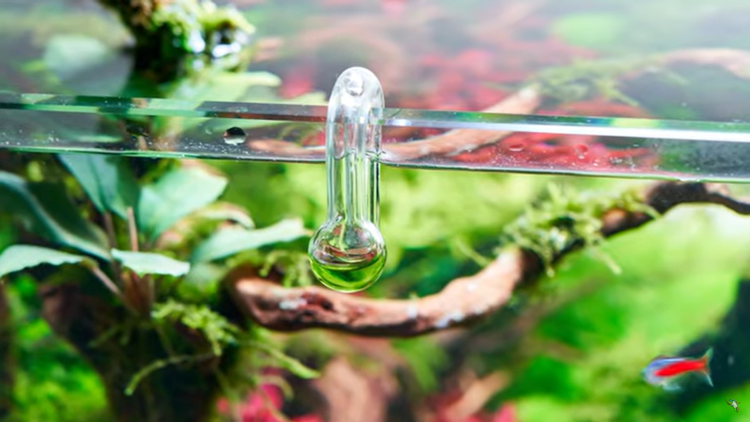
CO2 Drop Checker Explained: How They Work & Best Practices
In this article, we are diving into the world of CO2 drop checkers. If you have ever wondered how to keep your aquarium plants thriving while ensuring your fish stay safe, you are in the right place. Let’s break down everything you need to know about the CO2 drop checkers, how they work, and how to use them effectively.
What is a CO2 Drop Checker?
It’s a simple yet powerful tool used in aquariums to monitor CO2 levels. This device helps maintain the right balance of CO2 for optimal plant growth without harming your fish.
A CO2 drop checker is essentially a glass bulb containing a pH-sensitive solution that changes color based on CO2 levels in your aquarium. The solution inside typically uses 4 DKH water and Bromothymol blue, which reacts to changes in pH.
But how does this color change indicate CO2 levels? Bromothymol blue is a molecule that shifts color based on the pH levels. It turns blue at higher pH and yellow at lower pH. When CO2 dissolves in water, it forms carbonic acid, lowering the pH. The drop checker’s pH indicating solution changes color to reflect these shifts.
At a pH of 7.1, there are equal parts of protonated Bromothymol blue which is yellow and de-protonated Bromothymol blue, so the solution appears green, thus the solution appears green. If the solution turns blue, it means your CO2 levels are too low, and if it turns yellow, the levels are too high.
While CO2 probes are more accurate, they are also expensive and require constant calibration. The drop checker is a cost-effective and reliable alternative for hobbyists.
Setting Up The Drop Check
You need a glass drop checker, an indicator solution that comes with the checker, distilled water, and a clean, algae-free spot in your tank with good water circulation.
Start with cleaning the drop checker with distilled water. Then, fill it with indicator solution as directed on the bottle. Now, simply attach it to your tank. Some hook over the glass’s edge, while some have a suction cup to attach to the glass just beneath the water surface.
Either position it away from heaters and areas with poor circulation. In a few hours, the solution in your drop checker will change color. Remember, green is the target. If it’s blue, you need to increase CO2, and if it’s Yellow, reduce CO2 to avoid harming your fish.
Adjusting CO2 levels can be done by tweaking your CO2 system. It’s crucial to balance it right. Too much CO2 can suffocate your fish, while too little won’t benefit your plants.
Best Practices
Use a timer to schedule the CO2 injection with the lighting.
Turn CO2 on 1-3 hours before lights to ensure the CO2 levels are optimal when photosynthesis begins. Again, you need to tweak this by keeping an eye on the drop checker and adjusting the timer accordingly. The larger the tank, the longer it will take to reach optimum levels. But remember, the solution is revealing the levels from a couple of hours ago.
So it may take a few days to hone in on the right time. If the checker is turning green after an hour of lights on, you are probably in that sweet spot.
Finally, turn off CO2 an hour before lights out to prevent CO2 build up time. Basically, these times will ensure that CO2 levels are consistently optimal, which is key to a healthy, thriving aquarium.
Maintainance
Change the indicator solution every 3 months or when it starts to turn murky. Clean the drop checker regularly to prevent algae and calcium buildups. All this will ensure you are always getting the best reading possible.