
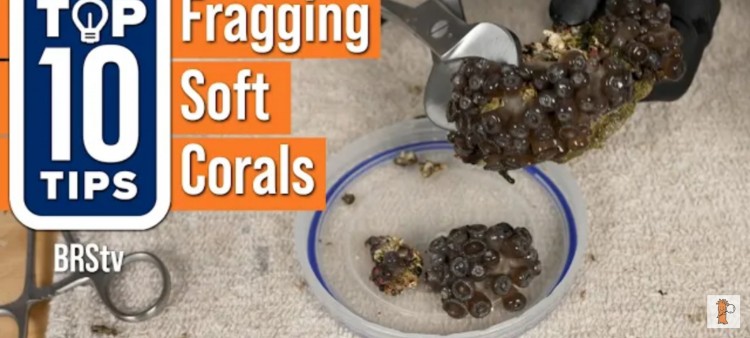
Top 12 Tips for Fragging Corals
In this article, we are sharing our top 12 soft coral fragging advice. Here what you will get from top to down are suggested top tools, what to cut and how, and a couple of safety tips that will keep you out of the ER.
1. Safety First
It is best practice to wear eye protection and gloves, but it is mandatory for fragging Zoas. Palytoxin poisoning is severe and is very easily avoidable. So, do the right thing and protect yourself. Also, make sure that your gloves fit because gluing small corals is a massive pain with sloppy, loose gloves.
2. Prep & Tools
Keep your work area organized and your tools laid out. It is advised to have bright lighting to see what you are cutting, but if you are confined to dark science labs, you can always wear a headlamp.
3. Uniform
Make sure you wear clothes that you can get glue all over. And, also if you have longer hair, put it up or pull it back. There is absolutely no magic trick to getting the glue out of your cloth or hair.
4. Tools of the Trade
Always have the essential tools and make sure to keep them for fragging only.
- Bone cutter: pick a size you are comfortable handling
- A Forcep for grabbing and holding the corals
- A Scissors
- Glue
- Frag plugs or rubbles
You can also keep sorted sizes so you can get creative and have options. And, lastly, make sure you have towels for both the floor and the for your hands.
5. Rise Your Tools in RO
Your tools will rust, but they will rust way faster if they are not cleaned after each use.
6. Natural Breaks and Shapes
Keeping in mind where you cut, natural breaks and shapes can actually aid in faster healing ad more natural growth patterns.
7. Gluing Tissue
This pertains specifically to mushrooms and leathers. Generally, you can’t glue tissues directly to the rocks. The corals create a slime coat that will sluff off the glue and become a tumbleweed.
8. Cutting Tools
Mushrooms
Starting with Mushrooms, use the bone cutter and cut the polyp off the rock leaving a little bit of substrate so you can glue it to the substrate or rubble. You can glue the whole single Mushroom to plugs o use scissors to cut them in half, but each half must have a mouth.
Then put it in a cub or rubble area where you can get a good flow, but they are not blown around. Let them attach naturally to the rubble, and then glue them in.
Leather
They are very easy to but with scissors. The trade secret is to secure them, however, which can be a little tricky. Then, you can sew them to rubber band them to your rubble or to your frag plugs or take two and glue them together, letting them heal that way.
Zoas
If your Zoas are on a rock, break up the substrate with the bone cutter. Again make sure some of the substrates are still attached to the polyps. They can be cut into individual single polyp frags. But you will have more success and a better recovery rate if you have four to five polyps per frag.
When cutting through the mat, it is very compact. So, always use scissors or a sharp blade. Remember to keep a natural shape and cut as little Tissue as possible
9. Gluing
Create a bond and secure your investment. When gluing less is always best, and always have an extra bottle on hand. Soft corals are pretty resilient and can be out of the water for a while. Many of them are found naturally in low tidal zones where they are out for hours, so take your time.
10 Dipping Before Sticking
When you are cutting through Tissue, namely with zoos, dip in iodine. It promotes healthier and generally more successful and faster recovery.
11. Plugs, Plates Rubbles
Depending upon the growth pattern of your corals, whether you are growing them out in the display or removing them for fragging, generally speaking:
- plugs are for selling and organizing
- discs are for propagation
- rubbles are for display
12. Promote Healing
Generally, newly cut frag should be in higher flow areas, and if you are cutting larger colonies, we suggest using carbon or even doing a larger water change. Where you place your frag should be under the same lighting conditions and water parameters as they originally came from.
Happy Reefing!