
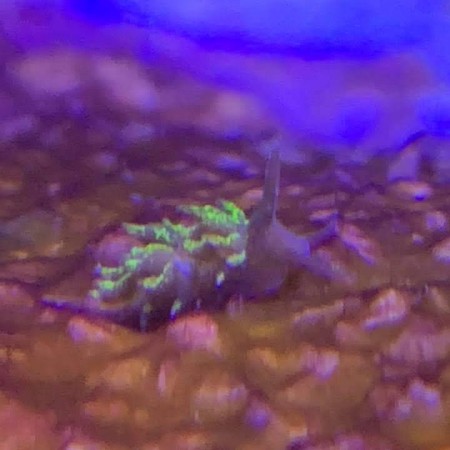
Zoa Eating Nudi
Aeolid Nudibranch
Saltwater Invertebrate
Species Group: Nudibranch
Log in or create an account to add this species to your tanks.
Water parameters
Temp
76-80 F
Temperature
Maintaining a stable and appropriate temperature is critical for the survival of aquatic life.
pH 7.8 - 8.4 potential of HydrogenMeasuring the acidity or alkalinity of water on a 0–14 scale, where 7 is neutral, 7 is alkaline.
NO3 1-20 ppm NitrateWhile less toxic than ammonia, high nitrate levels (above 40–80 ppm) are important to monitor because they can cause fish stress, stunted growth, and harmful algae blooms.
NO2 <0.0001 ppm NitriteIt is a highly toxic, intermediate compound in the nitrogen cycle produced from broken-down ammonia
PO4 0.01 - 0.1 ppm PhosphateIt is essential for plant development but must be managed, as excess levels trigger nuisance algae blooms and inhibit coral calcification.
NH3 <0.1 ppm AmmoniaIt is the primary killer of aquarium fish, causing gill damage, stress, and death
Ca 380 - 450 ppm CalciumSupporting the growth, skeletal structure, and shell formation of corals, mollusks, crustaceans, and coralline algae
KH 8 - 12 dKH AlkalinityIt acts as a shield, neutralizing acids to prevent dangerous pH "crashes" that can harm fish, corals, and plants.
Mg 1200 - 1400 ppm MagnesiumIt enables coral growth by supporting skeletal formation, assists in metabolic processes, and ensures that calcium is available for corals, clams, and coralline algae.
SG 1.023 - 1.026 SG SalinityEssential for maintaining stable, natural water parameters, proper osmoregulation, and stress-free environments for marine fish and corals
ORP 250 - 400 mV Oxidation-Reduction PotentialA higher positive mV indicates clean, oxygen-rich water with high water quality, while low readings indicate high pollution.
About Zoa Eating Nudi
General information
There are many different genuses and species amongst this group of Nubi and they are all carnivorous, toxic and inappropriate for our tanks.
Only one species that has a desirable trait and eat aiptasia (Berghia verrucicornis). All species are very similar in appearance, so all hitchhiking nudibranchs, even the desirable Berghia, should be treated the same way do not bother trying to ID them. The aeolid group has a common distinguishing feature such as being the presence of fleshy dorsal appendages, known as cerata. The nematocysts the Nudi consume is stored in these fleshy tassles.
At first, your zoanthids and polyps may appear irritated and open less and less each day. One of the first things you will notice is that your polyps refuse to open. Then you will slowly see the polyps disappear one by one. Eventually, you will see the colony start to disappear.
Properly quarantining of corals and dipping the to remove pest is a good way to prevent them from getting into your aquarium. There are some great dips that kill adults easily with minimal damage to the corals. Unfortunately, there are no current dips that work to rid the coral of the eggs. Which means if there are signs of Zoa Eating Nudis on your polyps then you will need to pick the eggs off manually and dip the coral multiple time to kill of Nudis that have recently hatched. It only takes one to start the cycle back up.
Diet & nutrition
Zoa Eating Nudibranch is carnivorous they feed off of zoanthids and polyps.
Breeding & spawning
The eggs are very sticky and must be removed manually when seen.
Nudis are simultaneous hermaphorodites, although self-fertilization rarely occurs. The eggs are the hardest obstacle to overcome in ridding yourself of these pests. There are some great dips that kill adults easily with minimal damage to the corals. Unfortunately, there are no current dips that work to rid the coral of the eggs. They must be extracted manually, or repeated dips must continue every 2 weeks to kill off any specimens that hatch.
All photos
Tap a photo to open the gallery viewer.