
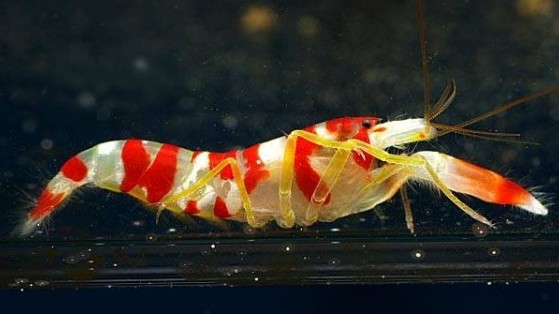
Red Banded Snapping Shrimp
Alpheus randalli
Saltwater Invertebrate
Species Group: Shrimp
Family: Alpheidae
Log in or create an account to add this species to your tanks.
Water parameters
Temp
76-80 F
Temperature
Maintaining a stable and appropriate temperature is critical for the survival of aquatic life.
pH 7.8 - 8.4 potential of HydrogenMeasuring the acidity or alkalinity of water on a 0–14 scale, where 7 is neutral, 7 is alkaline.
NO3 1-20 ppm NitrateWhile less toxic than ammonia, high nitrate levels (above 40–80 ppm) are important to monitor because they can cause fish stress, stunted growth, and harmful algae blooms.
NO2 <0.0001 ppm NitriteIt is a highly toxic, intermediate compound in the nitrogen cycle produced from broken-down ammonia
PO4 0.01 - 0.1 ppm PhosphateIt is essential for plant development but must be managed, as excess levels trigger nuisance algae blooms and inhibit coral calcification.
NH3 <0.1 ppm AmmoniaIt is the primary killer of aquarium fish, causing gill damage, stress, and death
Ca 380 - 450 ppm CalciumSupporting the growth, skeletal structure, and shell formation of corals, mollusks, crustaceans, and coralline algae
KH 8 - 12 dKH AlkalinityIt acts as a shield, neutralizing acids to prevent dangerous pH "crashes" that can harm fish, corals, and plants.
Mg 1200 - 1400 ppm MagnesiumIt enables coral growth by supporting skeletal formation, assists in metabolic processes, and ensures that calcium is available for corals, clams, and coralline algae.
SG 1.023 - 1.026 SG SalinityEssential for maintaining stable, natural water parameters, proper osmoregulation, and stress-free environments for marine fish and corals
ORP 250 - 400 mV Oxidation-Reduction PotentialA higher positive mV indicates clean, oxygen-rich water with high water quality, while low readings indicate high pollution.
About Red Banded Snapping Shrimp
General information
The Red Banded Snapping Shrimp and its cousins all have a unique left pincher. The pitcher is modified to produce a loud sound and stream of water whenever it is opened or closed. In the aquarium, it sounds like a loud clicking noise. You can hear this noise from outside the aquarium if you listen closely. Startling for the aquarist, it uses this skill in the wild to warn away predators and to knock down prey.
The Red Banded Snapping Shrimp and its mate will usually reside in a burrow of sand or mud, often with one of the gobies of the genera Amblyeleotris or Stonogobiops. Suitable Shrimp Gobies include Yasha Goby, Randall’s Goby, Yellow Watchman Goby, and Hi Fin Red Banded Goby. The goby’s superior eyesight also gives it advance warning of any predators. They also tend to share some of each other’s food. While the shrimp are in the burrow, you will usually only see one of them standing guard at any one time. Under the cover of darkness it is likely to forage, occasionally preying on tiny shrimp. Otherwise, it will subsist on meaty foods and bottom feeder tablets in the aquarium.
Thanks to its small size it’s very suitable for nano-reefs and other small tanks. It will live together with most prawn gobies, for example, the Hi Fin Red Banded Goby (Stonogobiops nematodes) or Amblyeleotris species. Triggers, larger Hawkfish, Groupers, Lionfish, and large predatory Wrasses may eat Red Banded Pistol Shrimp. They are best kept with reef safe fish.
The temperature between 75-80° F and pH between 8.1-8.4 with sg 1.024-1.026 (1.025 is ideal) is necessary to maintain. It is important that proper calcium (420-440 ppm), alkalinity (8-9.5 dKH – run it 7-8 if you are carbon dosing), and magnesium levels (1260-1350 ppm) are maintained. Raising magnesium levels gradually up to 1400-1600 ppm can help to combat algae outbreaks, just keep CA and Alk in line as you raise the Mg. Nitrates should be below 10 ppm and phosphates should be below .10 ppm. We recommend doing a water change when Nitrate levels rise to 10 ppm. It is important to replace your phosphate media when phosphates rise to .10 ppm. Media Reactors make the most efficient use of your phosphate media by fluidizing it.
Diet & nutrition
Maintaining proper pH, Ca, Alk, & Mg levels is important for shrimp. Providing additions of iodine will help the shrimp to molt and grow.
Origination
The Red Banded Spanning Shrimp is found in South and Eastern Asia.
Cautions
It is intolerant of copper or high nitrates but will require a correct iodine level in the water for proper molting.
Acclimation process
Take the time to do a drip acclimation with any shrimp as they do not tolerate rapid changes in water chemistry very well.
All photos
Tap a photo to open the gallery viewer.