
Agassizs Dwarf Cichlid
Apistogramma agassizii
Freshwater Fish
Species Group: New World Cichlids
Family: Cichlidae
Log in or create an account to add this species to your tanks.
Water parameters
Water parameters are being added.
About Agassizs Dwarf Cichlid
General information
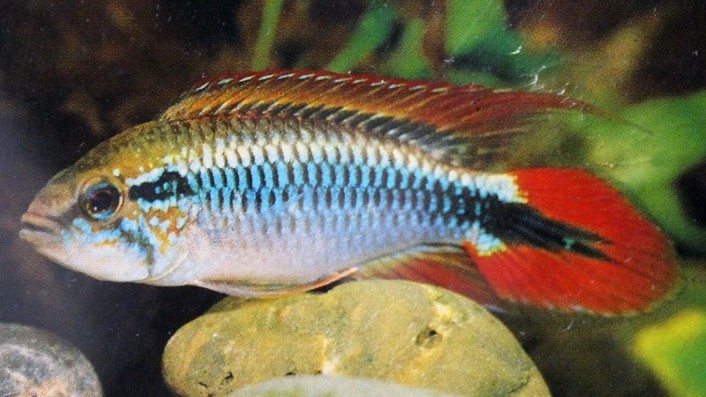
Agassiz's Dwarf Cichlid is a popular freshwater fish that belongs to the Cichlidae family. These fish are native to the South American Amazon River Basin and can be found in the slow-moving waters of the rivers and streams. They are small in size, typically growing to about 3-4 inches in length. Males are larger and more colorful than females, and they have a more elongated dorsal fin.
Diet & nutrition
Agassiz's Dwarf Cichlid is an omnivore and will eat a variety of foods. Their diet should consist of high-quality flake and pellet foods supplemented with live or frozen foods such as brine shrimp, bloodworms, and small insects. A varied diet will help maintain their health and vibrant colors.
Determining sex
Males and females are similar in appearance, but males are larger and more colorful than females. Males also have a more elongated dorsal fin.
Breeding & spawning
Agassiz's Dwarf Cichlid is a cave spawner, and they require a cave or other hiding place to lay their eggs. The female will lay her eggs on a flat surface within the cave, and the male will fertilize them. Both parents will then guard the eggs and fry. The fry will hatch in about 3-4 days and will become free-swimming in another 3-4 days. They can be fed with newly hatched brine shrimp or finely ground flake food.
Diseases
Agassiz's Dwarf Cichlid is relatively hardy and not prone to many diseases. However, like all fish, they are susceptible to bacterial and parasitic infections. It is essential to maintain good water quality and avoid overcrowding to prevent disease outbreaks.
Origination
Agassiz's Dwarf Cichlid is native to the Amazon River Basin in South America, specifically in Brazil, Colombia, and Peru.
Cautions
Agassiz's Dwarf Cichlid is generally peaceful and can be kept with other peaceful fish. However, males can become territorial during breeding and may become aggressive towards other males or similar-looking fish.
Acclimation process
When introducing Agassiz's Dwarf Cichlid to a new aquarium, it is important to acclimate them slowly to avoid shocking them. Float the bag in the aquarium for 15-20 minutes to allow the temperature to equalize, and then slowly add small amounts of aquarium water to the bag over the course of an hour.
All photos
Tap a photo to open the gallery viewer.