
Flameback Cichlid
Pundamilia nyererei
Freshwater Fish
Species Group: African Cichlids
Family: Cichlidae
Log in or create an account to add this species to your tanks.
Water parameters
Water parameters are being added.
About Flameback Cichlid
General information
The Flameback Cichlid is a freshwater species that is native to Lake Victoria in East Africa. It is a popular aquarium fish due to its vibrant colors and unique appearance. The Flameback Cichlid is also known as the Nyerere's Cichlid or the Haplochromis Flameback.
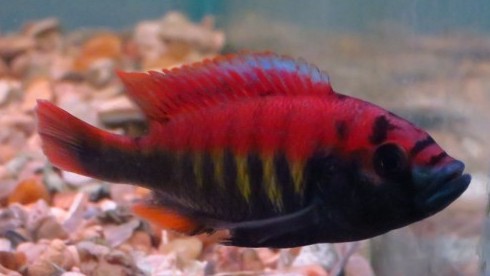
The Flameback Cichlid has a unique and striking appearance. The males have a bright red/orange body with a blue/green head and tail. The females are less colorful, with a silver body and black stripes. Both males and females have elongated dorsal fins.
Diet & nutrition
In the wild, the Flameback Cichlid feeds on small invertebrates and zooplankton. In captivity, they can be fed a diet of high-quality flakes or pellets, supplemented with occasional live or frozen foods such as brine shrimp, bloodworms, or daphnia.
Determining sex
Males are more colorful than females, with a brighter red/orange body and blue/green head and tail. Females have a silver body with black stripes and are generally less colorful than males.
Breeding & spawning
The Flameback Cichlid is a maternal mouthbrooder, which means that the female will hold the fertilized eggs in her mouth until they hatch. The male will display his brightest colors and court the female by digging a nest in the substrate or a flat surface, and performing a courtship dance.
Diseases
The Flameback Cichlid is susceptible to typical freshwater fish diseases such as ich, fin rot, and velvet. Proper tank maintenance and regular water changes can help prevent these diseases.
Origination
The Flameback Cichlid is native to Lake Victoria in East Africa.
Acclimation process
When introducing Flameback Cichlids to a new aquarium, it is important to slowly acclimate them to the new environment. This can be done by floating the bag with the fish in the aquarium for about 20 minutes to allow the temperature to equalize. Then, gradually add small amounts of water from the aquarium to the bag over the course of an hour, before releasing the fish into the tank.
All photos
Tap a photo to open the gallery viewer.