
Striped Headstander
Anostomus anostomus
Freshwater Fish
Species Group: Characins
Family: Anostomidae
Log in or create an account to add this species to your tanks.
Water parameters
Water parameters are being added.
About Striped Headstander
General information
The Striped Headstander, also known as the Striped Anostomus, is a freshwater fish species belonging to the Characidae family. It is native to South America and can be found in rivers and streams throughout the Amazon Basin and Orinoco Basin.
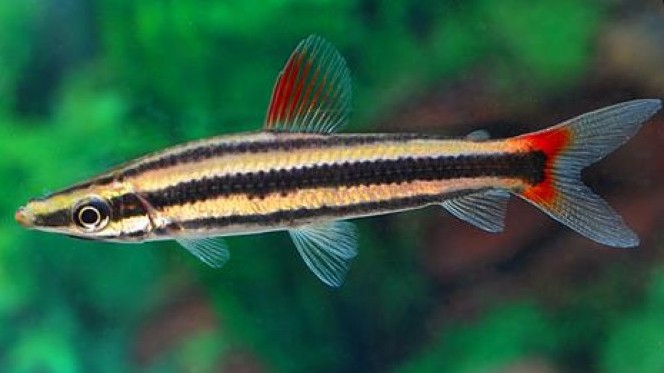
The Striped Headstander has a distinctive elongated body with a flat, horizontal head. It is named for the series of black and white stripes that run vertically along its body. These stripes are most prominent in juvenile fish and tend to fade as the fish grows older. The body is silver in color and the fins are typically red or orange.
Diet & nutrition
The Striped Headstander is an omnivorous species that feeds on a variety of foods in the wild, including insects, crustaceans, and small fish. In captivity, it can be fed a diet of pellets, flakes, and frozen foods.
Determining sex
Male Striped Headstanders tend to be larger and more brightly colored than females. During breeding season, males may also develop small tubercles on their head and fins.
Breeding & spawning
Breeding the Striped Headstander in captivity can be challenging, as they require specific water conditions and may need to be conditioned with a special diet. Males will often chase females and perform courtship displays before spawning. Females can lay up to 2,000 eggs, which will hatch within a few days.
Diseases
The Striped Headstander is generally hardy and not prone to many diseases if kept in proper conditions. However, like all fish, they can be susceptible to parasitic and bacterial infections if water quality is not maintained.
Origination
The Striped Headstander is native to South America and can be found in rivers and streams throughout the Amazon Basin and Orinoco Basin.
Cautions
The Striped Headstander is generally peaceful towards other fish, but may become aggressive towards members of its own species or other fish with similar body shapes. It is important to keep them in groups of at least six individuals and provide ample hiding places to reduce aggression.
Acclimation process
Like all fish, the Striped Headstander should be slowly acclimated to its new aquarium environment to reduce stress and prevent shock. This can be done by floating the bag in the aquarium for 10-15 minutes before releasing the fish.
All photos
Tap a photo to open the gallery viewer.