
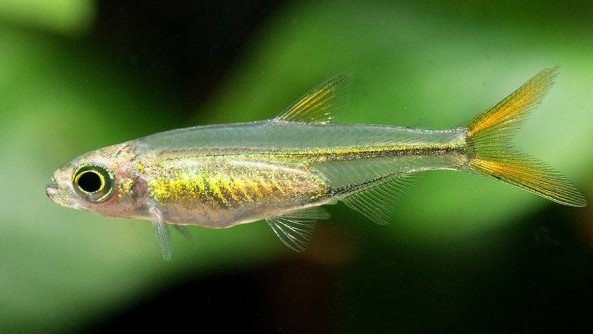
Jellybean tetra
Ladigesia roloffi
Freshwater Fish
Species Group: Tetras
Family: Alestidae
Log in or create an account to add this species to your tanks.
Water parameters
Water parameters are being added.
About Jellybean tetra
General information
The Jellybean tetra is a small, peaceful freshwater species that grows to an average length of 2-3 cm. It is best kept in groups of 6 or more in a well-planted aquarium with plenty of swimming space. They are active swimmers and should be kept in a tank with a minimum size of 10 gallons. The water temperature should be kept between 75-80°F, and pH levels between 6.5-7.5.
Diet & nutrition
The Jellybean tetra is an omnivore and will eat a variety of foods including flakes, pellets, frozen and live foods. They particularly enjoy small live or frozen insects and invertebrates such as brine shrimp and daphnia. A varied diet will help to keep them healthy and vibrant in color.
Determining sex
Male Jellybean tetras tend to be slimmer and more brightly colored than females, especially during breeding season. Females are generally rounder and less colorful.
Breeding & spawning
The Jellybean tetra is an egg-scatterer and will spawn in groups in a well-planted tank with plenty of hiding places. The water should be soft and slightly acidic, with a temperature of around 77°F. The eggs will hatch in about 24-36 hours and the fry will be free-swimming after another 3-4 days. It is recommended to separate the parents from the fry as the adults may eat their own eggs or fry.
Diseases
The Jellybean tetra is generally hardy and disease-resistant when kept in a well-maintained aquarium. However, they may be susceptible to common freshwater fish diseases such as ich and fin rot. Regular water changes and a balanced diet will help to prevent illness.
Origination
The Jellybean tetra is native to the upper Negro and Orinoco river basins in South America.
Cautions
The Jellybean tetra is a peaceful species and should not be kept with larger or more aggressive fish that may bully or eat them. It is also important to avoid sudden changes in water parameters as this can cause stress and illness.
Acclimation process
When introducing the Jellybean tetra to a new tank, it is important to acclimate them slowly to prevent shock. Float the bag in the tank for 15-20 minutes to allow the temperature to equalize, then slowly add small amounts of tank water to the bag over the next hour. After this, the fish can be gently released into the tank.
All photos
Tap a photo to open the gallery viewer.