
Blue tetra
Knodus borki
Freshwater Fish
Species Group: Tetras
Log in or create an account to add this species to your tanks.
Water parameters
Water parameters are being added.
About Blue tetra
General information
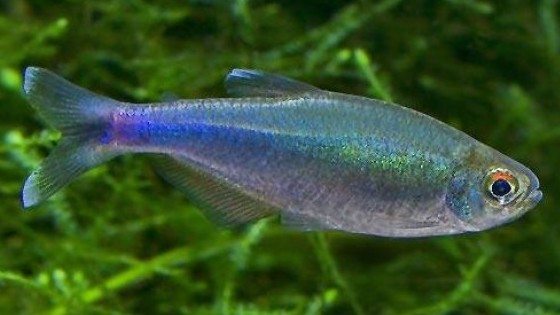
The Blue Tetra is a peaceful, small, and colorful freshwater fish that belongs to the family Characidae. They are native to the Amazon Basin in South America, particularly in the rivers and streams of Peru, Brazil, and Colombia. Blue tetras have a slender body shape and can grow up to 2 inches (5 cm) in length. They have a unique blue-silver coloration on their body and fins, making them an attractive addition to any aquarium. They are active swimmers and enjoy swimming in groups of at least 6 or more.
Diet & nutrition
Blue tetras are omnivores and will accept a variety of food, including flakes, pellets, and frozen foods such as brine shrimp and bloodworms. It is recommended to provide a varied diet to ensure they receive all the necessary nutrients for their overall health.
Determining sex
Male blue tetras are typically slimmer and more colorful than females, while females are rounder and have a more subdued coloration.
Breeding & spawning
Breeding blue tetras is relatively easy. They are egg scatterers, and spawning can be induced by providing a separate breeding tank with soft, acidic water, and fine-leaved plants for the eggs to stick to. The females can lay up to 200 eggs at once, and the eggs will hatch in about 24 to 36 hours. Once the eggs hatch, the fry can be fed with baby brine shrimp or finely crushed flakes.
Diseases
Blue tetras are generally hardy fish and are not prone to any particular diseases. However, they can be susceptible to common freshwater fish diseases, such as ich and fungal infections, which can be treated with appropriate medications.
Origination
Blue tetras are native to the Amazon Basin in South America, particularly in the rivers and streams of Peru, Brazil, and Colombia.
Cautions
Blue tetras are peaceful and can coexist with other peaceful fish species. However, they can be fin nippers, and therefore it is recommended to avoid keeping them with long-finned species such as angelfish and bettas.
Acclimation process
To ensure a successful acclimation process, it is recommended to float the bag containing the fish in the aquarium for 15 to 20 minutes to allow the water temperature to equalize. Then, add small amounts of aquarium water to the bag every 5 minutes until the bag is full. After 10 minutes, carefully release the fish into the aquarium.
All photos
Tap a photo to open the gallery viewer.