
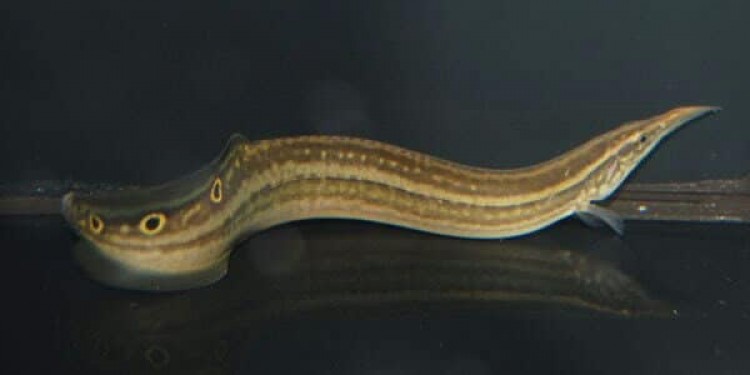
Peacock Eel
Macrognathus siamensis
Freshwater Fish
Species Group: Eel
Family: Mastacembelidae
Log in or create an account to add this species to your tanks.
Water parameters
Water parameters are being added.
About Peacock Eel
General information
The Peacock Eel is a fascinating and unique freshwater fish that can grow up to 10 inches (25 cm) in length. They require a minimum tank size of 30 gallons with plenty of hiding places and a soft substrate. They are native to rivers and streams in Southeast Asia.
Diet & nutrition
In the wild, Peacock Eels are carnivores and feed on small fish, crustaceans, and insects. In captivity, they should be fed a varied diet of live or frozen foods such as bloodworms, brine shrimp, and chopped seafood.
Determining sex
Males and females are similar in appearance and it can be difficult to determine their sex.
Breeding & spawning
Breeding Peacock Eels in captivity is rare and challenging. They require a separate breeding tank with specific water conditions and live foods to trigger spawning. The eggs are adhesive and will attach to a surface such as a plant or rock. The fry should be fed a diet of newly hatched brine shrimp and other small live foods.
Diseases
Peacock Eels are susceptible to common aquarium diseases such as bacterial infections and parasites. They are also prone to stress-related illnesses such as hole-in-the-head disease and should be kept in a stress-free environment.
Origination
The Peacock Eel is native to rivers and streams in Southeast Asia.
Cautions
Peacock Eels are known to be escape artists and require a tightly secured aquarium lid. They can also be aggressive towards smaller fish and should be kept with larger, peaceful tankmates. Additionally, they have sharp teeth and should be handled with care.
Acclimation process
When introducing Peacock Eels to a new aquarium, it is important to acclimate them slowly. Float the bag containing the fish in the aquarium for about 15-20 minutes to equalize the temperature. Then, slowly add small amounts of aquarium water to the bag over a period of at least 30 minutes. This will allow the fish to adjust to the new water conditions and prevent shock.
All photos
Tap a photo to open the gallery viewer.