
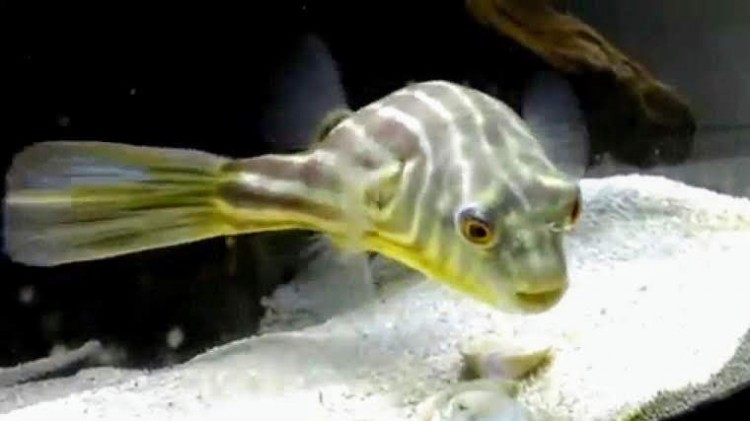
Fahaka pufferfish
Tetraodon lineatus
Freshwater Fish
Species Group: Puffer
Family: Puffer
Log in or create an account to add this species to your tanks.
Water parameters
Water parameters are being added.
About Fahaka pufferfish
General information
Fahaka pufferfish is a species of freshwater pufferfish that belongs to the family Tetraodontidae. It is a relatively large pufferfish and can grow up to 45 cm (18 in) in length. It is native to the rivers and lakes of Africa, particularly in the Nile, Niger, and Congo basins. Fahaka pufferfish is also known by several other common names including Nile puffer, globe fish, and lineatus puffer.
Diet & nutrition
Fahaka pufferfish is a carnivorous species that feeds mainly on live prey. In the wild, they primarily eat crustaceans, mollusks, and small fish. In captivity, they can be fed with a variety of live or frozen foods such as krill, shrimp, earthworms, and pieces of fish. They also require a hard-shelled prey to grind their teeth, which are constantly growing.
Determining sex
It is difficult to determine the sex of Fahaka pufferfish as they do not exhibit any external sexual dimorphism. However, mature females may appear slightly rounder and have a more prominent belly than males.
Breeding & spawning
Breeding Fahaka pufferfish in captivity is very challenging and has not been widely successful. Males will display breeding behavior by creating nests in the substrate, and females will lay eggs in the nests. The eggs hatch after 2-3 days, and the fry are very small and delicate. The fry require very specific water conditions and must be fed small, live food.
Diseases
Fahaka pufferfish is relatively hardy and not commonly affected by diseases. However, they are susceptible to bacterial and fungal infections if kept in poor water conditions or fed with poor-quality food. They may also develop swim bladder problems if overfed or fed with inappropriate food.
Origination
Fahaka pufferfish is native to the rivers and lakes of Africa, particularly in the Nile, Niger, and Congo basins. They can be found in slow-moving and still waters such as rivers, lakes, and swamps.
Cautions
Fahaka pufferfish is highly aggressive and territorial, especially towards other pufferfish, so they should be kept alone or with larger, aggressive fish that can tolerate their behavior. They also have a strong bite and can inflict serious injury on humans, so caution should be exercised when handling them.
Acclimation process
When introducing Fahaka pufferfish to a new aquarium, it is important to acclimate them slowly to the new environment to minimize stress and prevent health problems. The acclimation process should take at least 30 minutes and involve gradually adding small amounts of water from the new aquarium to the bag or container holding the fish. This allows the fish to gradually adjust to the new water conditions.
All photos
Tap a photo to open the gallery viewer.