
Venusta Angelfish
Paracentropyge venusta
Saltwater Fish
Species Group: Angel Large
Family: Angelfish
Log in or create an account to add this species to your tanks.
Water parameters
Temp
76-80 F
Temperature
Maintaining a stable and appropriate temperature is critical for the survival of aquatic life.
pH 7.8 - 8.4 potential of HydrogenMeasuring the acidity or alkalinity of water on a 0–14 scale, where 7 is neutral, 7 is alkaline.
NO3 1-20 ppm NitrateWhile less toxic than ammonia, high nitrate levels (above 40–80 ppm) are important to monitor because they can cause fish stress, stunted growth, and harmful algae blooms.
NO2 <0.0001 ppm NitriteIt is a highly toxic, intermediate compound in the nitrogen cycle produced from broken-down ammonia
PO4 0.01 - 0.1 ppm PhosphateIt is essential for plant development but must be managed, as excess levels trigger nuisance algae blooms and inhibit coral calcification.
NH3 <0.1 ppm AmmoniaIt is the primary killer of aquarium fish, causing gill damage, stress, and death
Ca 380 - 450 ppm CalciumSupporting the growth, skeletal structure, and shell formation of corals, mollusks, crustaceans, and coralline algae
KH 8 - 12 dKH AlkalinityIt acts as a shield, neutralizing acids to prevent dangerous pH "crashes" that can harm fish, corals, and plants.
Mg 1200 - 1400 ppm MagnesiumIt enables coral growth by supporting skeletal formation, assists in metabolic processes, and ensures that calcium is available for corals, clams, and coralline algae.
SG 1.023 - 1.026 SG SalinityEssential for maintaining stable, natural water parameters, proper osmoregulation, and stress-free environments for marine fish and corals
ORP 250 - 400 mV Oxidation-Reduction PotentialA higher positive mV indicates clean, oxygen-rich water with high water quality, while low readings indicate high pollution.
About Venusta Angelfish
General information
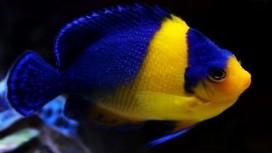
Venusta angelfish are somewhat rare dwarf angelfish that has a yellow body and face area, with a triangular blue patch on top of the head, and a blue colored saddle area that starts near the front dorsal fin and extends overs the rear portion of the body and caudal fin. Anal and pelvic fins are edged in blue. These angelfishes are usually found to inhabit steep outer coral and rocky reef slopes from 20 to over 130 feet (6 – 40 m) in depth. Usually observed singly, almost always upside down in reef caves.
Diet & nutrition
In their natural environment, the Venusta angelfish are known to feed on sponges, tunicates, and various crustaceans. In captivity, these angelfishes may be fed with frozen foods including fortified brine shrimp, mysis, and meals containing sponge matter or angelfish food preparations to be offered several times a day.
Determining sex
No sexual dimorphism observed with this angelfish species, however, male Venusta angelfish are larger than the females.
Breeding & spawning
Not much is known on the details of breeding and spawning for this angelfish species, however, they are known to form hybrids with Centropyge multifasciata. Some aquarists have observed this species to spawn 2 hours before lights out in the tank, and can release 300 to 1000 eggs per spaawning.
Origination
The Purple Masked Angelfish are known to be distributed from Japan to the northern Philippines.
Cautions
It is a fish that can be quite shy when first introduced to the aquarium, and may take a little time to settle, once accustomed in the tank, it can be rather territorial when new species (particularly docile/peaceful fish) are introduced to the tank afterwards. They are also known to pick on invertebrates found on live rocks.
Acclimation process
The Venusta Angelfish is best acclimated to a dimly lit aquarium with live rock to provide hiding places to retreat in when feeling threatened.
All photos
Tap a photo to open the gallery viewer.