
Blue Spotted Ribbon Tail Stingray
Taeniura lymma
Saltwater Fish
Species Group: Stingray
Family: Rays
Log in or create an account to add this species to your tanks.
Water parameters
Temp
76-80 F
Temperature
Maintaining a stable and appropriate temperature is critical for the survival of aquatic life.
pH 7.8 - 8.4 potential of HydrogenMeasuring the acidity or alkalinity of water on a 0–14 scale, where 7 is neutral, 7 is alkaline.
NO3 1-20 ppm NitrateWhile less toxic than ammonia, high nitrate levels (above 40–80 ppm) are important to monitor because they can cause fish stress, stunted growth, and harmful algae blooms.
NO2 <0.0001 ppm NitriteIt is a highly toxic, intermediate compound in the nitrogen cycle produced from broken-down ammonia
PO4 0.01 - 0.1 ppm PhosphateIt is essential for plant development but must be managed, as excess levels trigger nuisance algae blooms and inhibit coral calcification.
NH3 <0.1 ppm AmmoniaIt is the primary killer of aquarium fish, causing gill damage, stress, and death
Ca 380 - 450 ppm CalciumSupporting the growth, skeletal structure, and shell formation of corals, mollusks, crustaceans, and coralline algae
KH 8 - 12 dKH AlkalinityIt acts as a shield, neutralizing acids to prevent dangerous pH "crashes" that can harm fish, corals, and plants.
Mg 1200 - 1400 ppm MagnesiumIt enables coral growth by supporting skeletal formation, assists in metabolic processes, and ensures that calcium is available for corals, clams, and coralline algae.
SG 1.023 - 1.026 SG SalinityEssential for maintaining stable, natural water parameters, proper osmoregulation, and stress-free environments for marine fish and corals
ORP 250 - 400 mV Oxidation-Reduction PotentialA higher positive mV indicates clean, oxygen-rich water with high water quality, while low readings indicate high pollution.
About Blue Spotted Ribbon Tail Stingray
General information
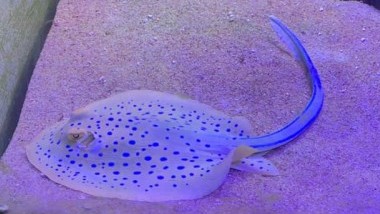
The Blue Spotted Ribbon Tail Stingray is a smaller ray (12 to 14 inches across) has an oval pectoral disc that is usually yellow to brown to olive-green and scattered with blue spots on top, and white underneath. It looks a lot like the blue spotted stingray, but this ray is much rounder and has a noticeably thicker tail. This bottom dweller has a very sensitive abdomen that needs a sandy substrate. The sand is also used as a form of camouflage. A coarse substrate will cause abrasions that may lead to infection.
Diet & nutrition
Difficult to feed at first, this species should be fed squid or live feeder shrimp. Chunks of marine fish, scallops, and squid may be introduced once acclimated. They prefer hunting crustaceans and small fish in reefs and will follow the high tide into shallower, sandy areas.
Most rays can be trained to accept foods such as earthworms, shrimp, squid, clams or pieces of fish from a feeding stick or your hand. Caution when hand-feeding rays; they may accidentally bite your fingers. Avoid feeding large open-water fish such as tuna and swordfish to your stingray, these types of fish contain higher levels of mercury in their tissues which can poison a stingray.
Should be fed small meals daily, do not overfeed stingrays look at their disk and tail if you start to see the skeletal structure then you should be feeding more.
To stay healthy and grow properly, stingrays need the right amounts of fats, proteins, vitamins, and minerals in their diet. For this reason, it is essential to feed a large variety of foods on a regular basis.
Amino acid and vitamin supplements can be added directly to the food before feeding if necessary. Be sure to remove uneaten food from the tank immediately to help prevent stress from poor water quality.
Determining sex
At sexual maturity, male rays have external sexual organs called claspers which are visible near the base of the tail.
All photos
Tap a photo to open the gallery viewer.