
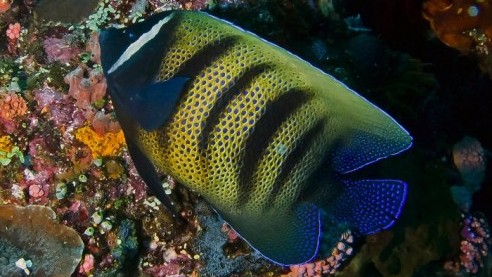
SixBanded Angelfish
Pomacanthus sextriatus
Saltwater Fish
Species Group: Angel Large
Family: Pomacanthidae
Log in or create an account to add this species to your tanks.
Water parameters
Temp
76-80 F
Temperature
Maintaining a stable and appropriate temperature is critical for the survival of aquatic life.
pH 7.8 - 8.4 potential of HydrogenMeasuring the acidity or alkalinity of water on a 0–14 scale, where 7 is neutral, 7 is alkaline.
NO3 1-20 ppm NitrateWhile less toxic than ammonia, high nitrate levels (above 40–80 ppm) are important to monitor because they can cause fish stress, stunted growth, and harmful algae blooms.
NO2 <0.0001 ppm NitriteIt is a highly toxic, intermediate compound in the nitrogen cycle produced from broken-down ammonia
PO4 0.01 - 0.1 ppm PhosphateIt is essential for plant development but must be managed, as excess levels trigger nuisance algae blooms and inhibit coral calcification.
NH3 <0.1 ppm AmmoniaIt is the primary killer of aquarium fish, causing gill damage, stress, and death
Ca 380 - 450 ppm CalciumSupporting the growth, skeletal structure, and shell formation of corals, mollusks, crustaceans, and coralline algae
KH 8 - 12 dKH AlkalinityIt acts as a shield, neutralizing acids to prevent dangerous pH "crashes" that can harm fish, corals, and plants.
Mg 1200 - 1400 ppm MagnesiumIt enables coral growth by supporting skeletal formation, assists in metabolic processes, and ensures that calcium is available for corals, clams, and coralline algae.
SG 1.023 - 1.026 SG SalinityEssential for maintaining stable, natural water parameters, proper osmoregulation, and stress-free environments for marine fish and corals
ORP 250 - 400 mV Oxidation-Reduction PotentialA higher positive mV indicates clean, oxygen-rich water with high water quality, while low readings indicate high pollution.
About SixBanded Angelfish
General information
Six-Banded Angelfish may be considered reef safe but with caution. It is moderate to care for and many experienced aquarists consider keeping a Six Bar Angel to be a rewarding achievement. To reduce stress, a large aquarium along with many hiding places is required. With its beautifully composed body, the Six-Banded Angelfish makes a captivating addition to any tank. Should be kept in a large tank with plenty of live rock for hiding places. The Juvenile Six-Banded Angelfish fish is considered less risky for a reef aquarium but as it grows it may nip at stony corals with large polyps and eats clams, soft corals. The Six-Banded Angelfish is semi-aggressive towards other similar genus species, other angelfish, and its own species, therefore we suggest you keep them singly or if you still want to keep it in a group it is advisable to keep them in a large and cleverly decorated aquarium.
Diet & nutrition
Captive diet of the Six-Banded Angelfish should consist of a wide variety of frozen foods including brine shrimp, mysis, and food materials containing sponge matter. Furthermore, flake foods, and especially those containing Spirulina and/or Nori should be also offered, along with fresh broccoli and macroalgae, as ‘greens’ make up a portion of this species diet, especially the juveniles and subadults.
Determining sex
Six-banded angelfishes are hermaphroditic and usually starts as females before changing into males when the need arises.
Breeding & spawning
Difficult to breed and have no reports yet on being bred in captivity.
Diseases
Six-banded angelfishes are prone to diseases such as White Spot Disease caused by Cryptocaryon irritans which causes scratching and white dots on the fish which results in the fish suffocating from these parasites blocking the gills from providing oxygen. Another common disease is Marine Velvet caused by Oodinium ocellatum which results to a peppery coating giving a yellow to light brown "dust" on body, clamped fins, respiratory distress (breathing hard as seen as frequent or quick gill movements), cloudiness of eyes, glancing off decor or substrate, and possible weight loss.
Origination
Six-banded angelfishes are widely distributed in the Indo-Pacific region ranging from the Ryukyu Island to Malaysia and Indonesia to Solomon Islands, south to Australia in the Great Barrier Reef.
Cautions
Juveniles tend to be shy and hide in crevices and caves when first introduced in the aquarium while adults are not as aggressive. The Six-banded Angelfish is prone to nip at stony and soft corals, sessile invertebrates, and clam mantles.
All photos
Tap a photo to open the gallery viewer.