
Panther Grouper
Cromileptes altivelis
Saltwater Fish
Species Group: Groupers
Family: Plesiopidae
Log in or create an account to add this species to your tanks.
Water parameters
Temp
76-80 F
Temperature
Maintaining a stable and appropriate temperature is critical for the survival of aquatic life.
pH 7.8 - 8.4 potential of HydrogenMeasuring the acidity or alkalinity of water on a 0–14 scale, where 7 is neutral, 7 is alkaline.
NO3 1-20 ppm NitrateWhile less toxic than ammonia, high nitrate levels (above 40–80 ppm) are important to monitor because they can cause fish stress, stunted growth, and harmful algae blooms.
NO2 <0.0001 ppm NitriteIt is a highly toxic, intermediate compound in the nitrogen cycle produced from broken-down ammonia
PO4 0.01 - 0.1 ppm PhosphateIt is essential for plant development but must be managed, as excess levels trigger nuisance algae blooms and inhibit coral calcification.
NH3 <0.1 ppm AmmoniaIt is the primary killer of aquarium fish, causing gill damage, stress, and death
Ca 380 - 450 ppm CalciumSupporting the growth, skeletal structure, and shell formation of corals, mollusks, crustaceans, and coralline algae
KH 8 - 12 dKH AlkalinityIt acts as a shield, neutralizing acids to prevent dangerous pH "crashes" that can harm fish, corals, and plants.
Mg 1200 - 1400 ppm MagnesiumIt enables coral growth by supporting skeletal formation, assists in metabolic processes, and ensures that calcium is available for corals, clams, and coralline algae.
SG 1.023 - 1.026 SG SalinityEssential for maintaining stable, natural water parameters, proper osmoregulation, and stress-free environments for marine fish and corals
ORP 250 - 400 mV Oxidation-Reduction PotentialA higher positive mV indicates clean, oxygen-rich water with high water quality, while low readings indicate high pollution.
About Panther Grouper
General information
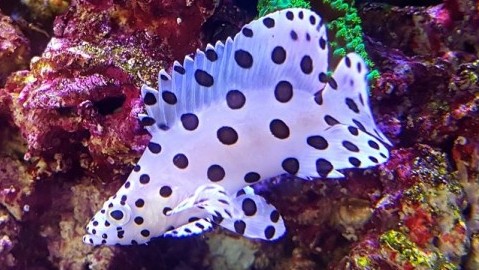
With beautiful black polka dots over its serene off-white body, the Panther Grouper makes a stunning addition to any aquarium. It can attain a size of up to 20 inches in the wild but is imported about 2-3 inches typically. Keeping the Panther Grouper in a larger aquarium is advised. The Panther Grouper has a distinctive feature of breaking up the body shape that smothers it from the predators. It is hardy, has a long life. It is very important that the aquarium should have sufficient filtration to maintain the quality of water, as the Panther Grouper produces a large amount of waste. It should not be housed with small fishes that can fit in its mouth as the Panther Grouper is a highly predatory fish. This is precisely why the Panther Grouper is not considered a reef-safe species. It seems to be tolerant of copper treatments and is considered as a good candidate for hyposalinity therapy. It grows very quickly and is hardy in nature that makes it resistant to many fish infections or diseases. The Panther Grouper requires a lot of hiding spots and overhangs.
All photos
Tap a photo to open the gallery viewer.