
Marthae Silver Hatchet
Carnegiella marthae
Freshwater Fish
Species Group: Hatchets
Family: Gasteropelecidae
Log in or create an account to add this species to your tanks.
Water parameters
Water parameters are being added.
About Marthae Silver Hatchet
General information
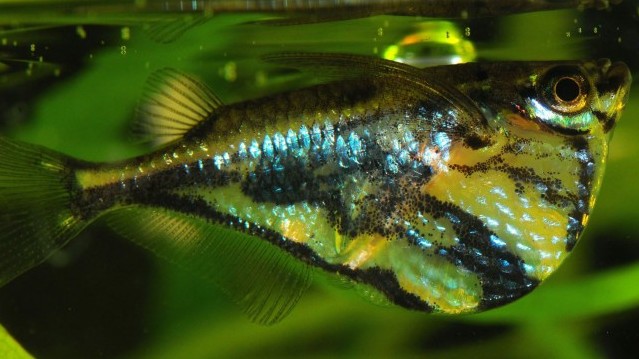
These fish have a hatchet-shaped body, hence their common name, they are silver with black markings and have a horizontal gold stripe, they are usually 1.5 inches. To keep these fish in captivity, water temperature should range from 75ºF to 81ºF and water pH should be between 5.5 and 7.0. The tanks should have plants, floating vegetation and a sandy substrate. These fish are great jumpers and so the tank should have a cover. This species can be kept in community aquariums, however, its tankmates should be similarly sized and peaceful. It should be kept in groups of 10 or more.
Diet & nutrition
This species is carnivorous. In the wild it is a predator that feeds on both terrestrial and aquatic.
Breeding & spawning
This species is endemic to South America. It inhabits heavily wooded, rainforest streams and pools.
Acclimation process
Marble Hatchets need to be slowly acclimated to a new aquarium, a good method for this is the drip method. The aquarium lights should be off and lights in the room should be dim, the bag in which the fish is should be placed in the surface of the water to float for about 15 minutes, this allows the water in the bag to adjust to the water in the tank. The bag contents should be poured into a 1 gallon bucket that has never been cleaned with any chemicals, the fish should be enterally submerged. A siphon, using airline tubing, should be set up and a drip line should run from the main aquarium to the bucket. Several loose knots should be tied in the airline tubing to regulate flow. Sucking the end of the airline tube that goes to the bucket will begin a siphon, the flow should be regulated to 2 to 4 drips per second. Once the water in the buckets doubles, half should be discarded and the process should be repeated until it doubles again. Afterwards, the fish can be moved to the aquarium.
All photos
Tap a photo to open the gallery viewer.