
Kissing Gourami
Helostoma temmincki
Freshwater Fish
Species Group: Gouramis
Family: Helostomatidae
Log in or create an account to add this species to your tanks.
Water parameters
Water parameters are being added.
About Kissing Gourami
General information
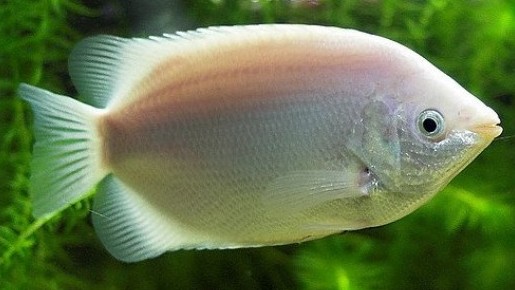
These fish have two natural color morphs, green and pink. The green morph originated in Thailand and is greyish green with dark horizontal stripes. The pink morph originated in the south of Indonesia and is orangish pink. Both morphs are 12 inches long, however, in an aquarium they are usually 5 inches. They also have a labyrinth organ, this is an organ that acts like a lung allowing the fish to breathe atmospheric air, this is a survival mechanism for when the fish is in polluted water or areas affected by droughts. These fish have an aggressive behavior and can live for over 20 years so they are often not recommended to be kept in home aquariums. To keep these fish in captivity, water temperature should range from 72ºF to 82ºF and water pH should be between 6.0 and 8.0. The tank should have open areas for swimming, plants, rocks, bogwood and a gravel substrate. They can be kept in a community aquarium with larger fish, however, their attitude depends a lot on the individual itself and so not all individuals are suitable for community aquariums.
Diet & nutrition
This species is herbivorous. In the wild they feed on algae and biofilm. In a tank they can be fed with vegetable dried foods, algae and other vegetable matter.
Breeding & spawning
Unlike the other Gouramis, the Kissing Gourami doesn’t build bubble nests, instead, it is an egg scatterer. To breed this species in captivity, a very large tank with dense vegetation, water temperature ranging from 72ºF to 82ºF and water pH between 6.8 and 8.5 is required. After the eggs are fertilized and scattered the adults should be removed from the tank to prevent them from eating the eggs. The eggs take about 17 hours to hatch and the fry become free swimming after 2 to 3 days.
Origination
They are native to Thailand and to Indonesia.
All photos
Tap a photo to open the gallery viewer.