
Pearl Gourami
Trichogaster leeri
Freshwater Fish
Species Group: Gouramis
Family: Belontiidae
Log in or create an account to add this species to your tanks.
Water parameters
Water parameters are being added.
About Pearl Gourami
General information
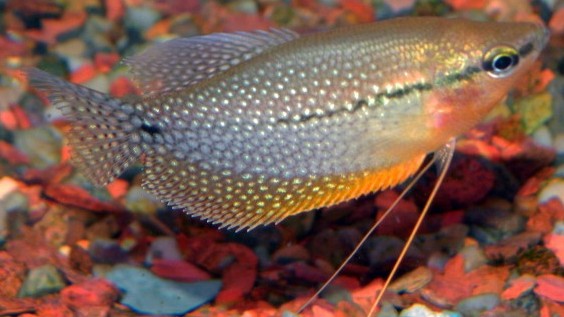
These fish are brown with white dots all over their body and a dark horizontal stripe. These fish are usually 4.8 inches. Pearl Gouramis are labyrinth fish, these have a special organ that acts like a lung allowing them to breathe atmospheric air, this is a survival mechanism for when they are in polluted waters or areas affected by droughts. To keep these fish in captivity, water temperature should range from 75ºF to 82ºF and water pH should be between 6.5 and 8.5. The tank should have plants, floating vegetation, hiding places and open areas for swimming. Pearl Gouramis are peaceful and can be kept in community aquariums, however, aggressive tankmates and small tankmates should be avoided.
Diet & nutrition
This species is omnivorous. In the wild, it feeds on crustaceans, insects and zooplankton. In an aquarium it can be fed with flakes and live foods. Vegetable matter should also be included in their diet to keep them at optimal health.
Determining sex
Males are more colorful while females are rounder.
Breeding & spawning
To breed this species in captivity, the breeding tank, 10 gallons or more, should have plenty of floating vegetation, water pH around 7 and water temperature around 82ºF. When the females start getting rounder, which means they are full of eggs, males start building a bubblenest among the floating vegetation and their throat and chest turns bright red. After building the nest, males will display in front of the females and after they spawn, the male will gather all the eggs in the nest and guard them, at this point the female should be removed since it may be attacked by the male. The eggs take 1 to 2 days to hatch and the fry become free swimming after 4 to 5 days, at this time the male should be removed too.
Origination
This species is endemic to Thailand, Malaysia, Borneo and Sumatra and was introduced in Singapore and Colombia.
All photos
Tap a photo to open the gallery viewer.