
Palespotted Cory Cat
Corydoras gossei
Freshwater Fish
Species Group: Corydoras Catfish
Family: Callichthyidae
Log in or create an account to add this species to your tanks.
Water parameters
Water parameters are being added.
About Palespotted Cory Cat
General information
The average adult is about 2 inches in length. They are peaceful and can be kept in a community aquarium and as a shoaling species they should be kept in groups of at least 6. Not a fan of bright light, this species likes to have hiding places to get some refuge, so an aquarium with plants, bogwoods and rocks is advisable. They prefer water temperatures of 71ºF to 78ºF.
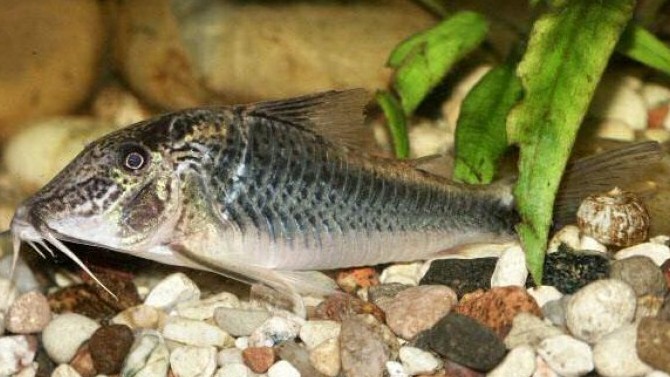
Corydoras gossei has greyish bronze flanks, brown head, pale belly and a dark vertical band in the caudal fin. Due to the greyish color on its upper half, it got the common name of Smokey Cory. It is a facultative air breather so it often goes to the surface for a gulp of air, it also has the ability to tilt its eyes appearing to be blinking.
Diet & nutrition
They are omnivores. In an aquarium they can be fed with prepared, live or frozen foods ( like Daphnia and bloodworms). The best time to feed them is at lights out because that is when they are most active (they are a nocturnal species).
They are bottom dwellers that eat food that has sunk to the substrate which makes many people say they are cleaners and can survive just by eating the leftovers of their tankmates, this is not true and care must be taken to make sure there is enough food reaching the bottom for them to eat.
Determining sex
Females are larger and wider than males, which, can be easily seen when looking from above. Mature males usually have pointed fins instead of rounded fins.
Breeding & spawning
Feeding the Corydoras a lot of live food might lead them into a breeding state, in which, the females get “fatter” and the males pursue the females. Eggs may be deposited in plants, rocks or even the aquarium’s glass. A daily change of the waters to cooler waters with increased oxygenation and flow will help the young spawn. Incubations lasts 3 to 4 days, at first the fry will absorb their yolk sacs and only after that, small live foods like microworms should be provided. Once the young spawn, they should be separated from the adults to avoid getting eaten.
Origination
Rio Mamoré in Brazil, South America.
Cautions
Substrate should be sand or rounded gravel, a sharp gravel substrate can hurt its barbs. It is important to keep a clean substrate, otherwise, there will be a bacteria pile-up in the substrate that may cause an infection in the Corydoras’s barbs.
They should be handled carefully since they have stiffened pectoral-fin spines that can pierce human skin and cause a painful sting.
All photos
Tap a photo to open the gallery viewer.