
Caudopunctatus Cichlid
Neolamprologus caudopunctatus
Freshwater Fish
Species Group: African Cichlids
Family: Cichlidae
Log in or create an account to add this species to your tanks.
Water parameters
Water parameters are being added.
About Caudopunctatus Cichlid
General information
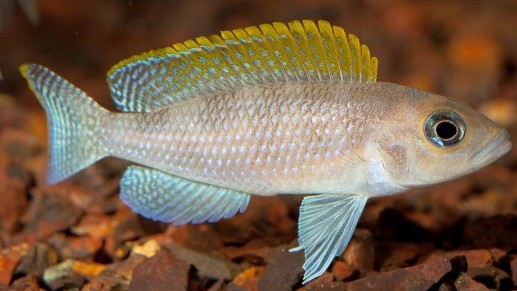
The average adult male is 3 inches while the average adult female is 2 inches. They have a silver body. The caudal fin has pearl-colored spots that reflect light, hence the name “caudopunctatus” and the dorsal and anal fins have yellow and blue outlines. Their coloration may change to brown vertical stripes when they are stressed or defending their territory.
To keep this species in captivity, the water should have a pH of 8.6 to 9.0 and water temperatures ranging from 75.2ºF to 78.8ºF. The substrate should be sandy (they enjoy playing with sand), and there should be plenty of rocks and shells present to form caves, provide open space for swimming. This species is one of the less aggressive ones inside its genus and can be kept in a community aquarium. These fish like to swim a lot all over the tank while still defending their territory. However, they are not violent and although males can sometimes fight it’s never a violent conflict.
Diet & nutrition
This species is omnivorous. In captivity, they should be fed with both dried foods and live/frozen foods.
Determining sex
Males are larger and have a more intense coloration than females.
Breeding & spawning
The female lays her eggs in a rock or a shell. Afterward, she invites the male to fertilize them, she will then cover the eggs with sand. The eggs hatch after 3 to 4 days and the fry will spend their time hiding in the shell or the rock until the female uncovers it by removing the sand. By this time, the fry will remain near the spawning site while one of the parents stays with them and the other defend their territory. The fry will become free swimming in 5 to 6 days. To breed this fish in captivity, water should be at about 78ºF with a pH of 7.8, and there should be plenty of caves and rocks. This species keeps breeding until the tank is saturated with offspring.
Origination
This species can be found rocky coastal waters in Lake Tanganyika, Africa.
All photos
Tap a photo to open the gallery viewer.