
Compressiceps Cichlid
Dimidiochromis compressiceps
Freshwater Fish
Species Group: African Cichlids
Family: Cichlidae
Log in or create an account to add this species to your tanks.
Water parameters
Water parameters are being added.
About Compressiceps Cichlid
General information
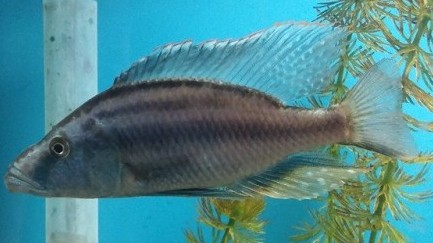
The average adult is 10 inches and has a life span of 8 years, however, they can become larger and live longer in an aquarium. This species has a compressed body and a large mouth, in fact, its jaw is one third of the total body length. It has a silver coloration with a dark stripe that goes from the snout to the tail which helps the fish camouflage. Sexually mature males are blue with bright red and orange fins. It is a predatory species that due to its thin, compressed body can move with great bursts of speed that together with its ability to camouflage in the vegetation, helps it ambush its preys. It is the only known predator to eat the prey’s tail first. Some fishermen have seen it eat the eyes of other fish, hence its common name, however, it is unlikely to see this behavior in an aquarium. To be kept in captivity, these fish need water temperatures ranging from 73ºF to 82ºF, a large aquarium with large open areas for them to swim, a sandy substrate and hiding places like caves. Aquariums without plants will stress them so it is recommended to have quite a bit of vegetation in the aquarium. It’s a predatory species so they shouldn’t be kept with small species and their tankmates should be larger than them. They can be kept in a group as long as there are several females and only one male. There is an albino form that can be found in stores.
Diet & nutrition
These fish are omnivorous. In an aquarium they should be fed with prawns, cod, mussels, krill, pellets and vegetable matter.
Determining sex
Mature males are large and colorful while females are silver and small.
Breeding & spawning
There should be several females to just one male. When breeding time comes, the male will chose a spawning site and will start showing intense color to get a female’s attention. Once a female is interested, she will approach the spawning site, lay her eggs and then pick them up with her mouth. The female will then start chasing the male and he will fertilize the eggs in her mouth.
Diseases
These fish can suffer from Malawi bloat if their dietary needs aren’t met.
Origination
This species can be found in many areas of Lake Malawi. It inhabits shallow waters with sandy substrates and plenty of vegetation.
Cautions
To keep these fish healthy, the aquarium’s water needs to be frequently changed and extremely clean.
All photos
Tap a photo to open the gallery viewer.