
Kribensis Cichlid
Pelvicachromis pulcher
Freshwater Fish
Species Group: African Cichlids
Family: Cichlidae
Log in or create an account to add this species to your tanks.
Water parameters
Water parameters are being added.
About Kribensis Cichlid
General information
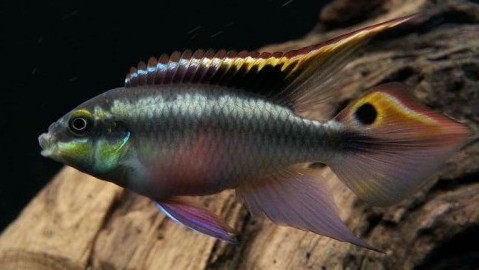
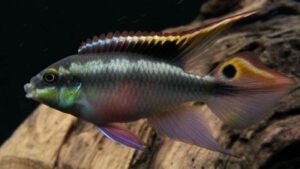
The average male adult is 4 inches and the average female adult is 3 inches. They are one of the smallest Cichlids, hence it’s common name “Dwarf Cichlid”. They exist in a variety of colors and have a pinkish belly, during the breeding season the female’s belly turns red. To keep this species in an aquarium the water temperature should range from 75ºF to 81ºF, the tank should have a sand or fine gravel substrate and it should contain plenty of hiding places, mainly caves, as well as open space to swim. These fish can be kept in community aquariums, however, it is important to say that they do become extremely territorial when breeding and that they may nip the fins of slow-moving tankmates. They can be kept with other Cichlids as long as the aquarium is large enough to have various territories, also, it is advisable to keep them with species that aren’t bottom dwelling nor cave-dwelling to avoid competition for the same territory. This species should be kept in pairs, a large aquarium is required if there is more than one pair present. These fish easily adapt to different conditions so they are a good beginner’s fish. There is an albino variety created through selective breeding.
Diet & nutrition
This species is omnivorous. It can be fed with Cichlid pellets and complemented with live and frozen foods and with vegetable matter. They are bottom dwellers so they need to be fed with food that sinks.
Determining sex
Males are larger and have pointed dorsal, caudal and anal fins. Females are rounder and have a red belly during spawning.
Breeding & spawning
Unlike many other species, these fish can breed in community tanks. When both males and females start displaying more intense colors, it means that the spawning season is beginning. The female will dance in front of the male displaying her red belly to get his interest, if she succeeds then they will form a monogamous pair. As soon as they are ready they will chose a cave to spawn and may disappear for days. Once the fry are free-swimming, they can be fed fry commercial foods, newly hatched brine shrimp or finely crumbed flake food. The fry should be fed several times during the day so it becomes very important to frequently change the water due to the increase in biological load. Sometimes, while taking care of the fry, one parent may attack the other, in this case it is best to separate them to avoid fights. After 2 to 4 weeks the fry should be separated from the parents and the parents will be ready to mate again.
Origination
This species can be found in Nigeria and in the Cameroons, Africa. It inhabits still and slow moving waters that are shallow and densely vegetated.
Articles
All photos
Tap a photo to open the gallery viewer.