
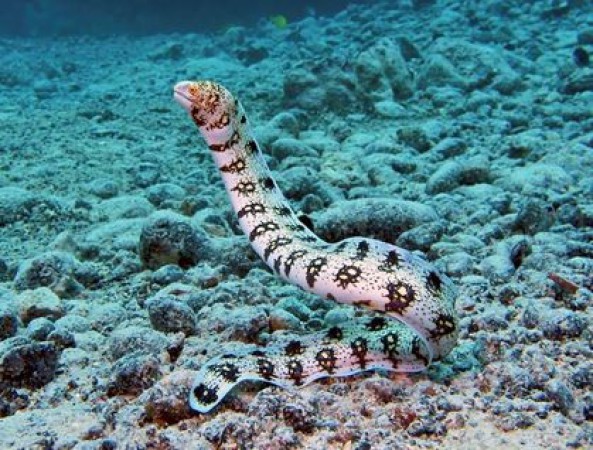
Snowflake Eel
Echidna nebulosa
Saltwater Fish
Species Group: Eel
Family: Muraenidae
Log in or create an account to add this species to your tanks.
Water parameters
Temp
76-80 F
Temperature
Maintaining a stable and appropriate temperature is critical for the survival of aquatic life.
pH 7.8 - 8.4 potential of HydrogenMeasuring the acidity or alkalinity of water on a 0–14 scale, where 7 is neutral, 7 is alkaline.
NO3 1-20 ppm NitrateWhile less toxic than ammonia, high nitrate levels (above 40–80 ppm) are important to monitor because they can cause fish stress, stunted growth, and harmful algae blooms.
NO2 <0.0001 ppm NitriteIt is a highly toxic, intermediate compound in the nitrogen cycle produced from broken-down ammonia
PO4 0.01 - 0.1 ppm PhosphateIt is essential for plant development but must be managed, as excess levels trigger nuisance algae blooms and inhibit coral calcification.
NH3 <0.1 ppm AmmoniaIt is the primary killer of aquarium fish, causing gill damage, stress, and death
Ca 380 - 450 ppm CalciumSupporting the growth, skeletal structure, and shell formation of corals, mollusks, crustaceans, and coralline algae
KH 8 - 12 dKH AlkalinityIt acts as a shield, neutralizing acids to prevent dangerous pH "crashes" that can harm fish, corals, and plants.
Mg 1200 - 1400 ppm MagnesiumIt enables coral growth by supporting skeletal formation, assists in metabolic processes, and ensures that calcium is available for corals, clams, and coralline algae.
SG 1.023 - 1.026 SG SalinityEssential for maintaining stable, natural water parameters, proper osmoregulation, and stress-free environments for marine fish and corals
ORP 250 - 400 mV Oxidation-Reduction PotentialA higher positive mV indicates clean, oxygen-rich water with high water quality, while low readings indicate high pollution.
About Snowflake Eel
General information
This is a very hardy eel, but an escape artist. A 50 gallon or larger aquarium with plenty of live rock and a tight fit canopy is ideal. Most of the eels that are lost in an aquarium are due to poorly sealed tanks. It can be housed with some invertebrates, like anemones, corals, starfish, sea urchins. Also, other relatively large, aggressive fish, such as lionfish, tangs, triggerfish, wrasses is suitable as tankmates. To put same species into the same tanks is possible only if they introduced to the tank at the same time and also there should be enough rooms and shelter for them to hide. Smaller fish are likely to be eaten by the eel.
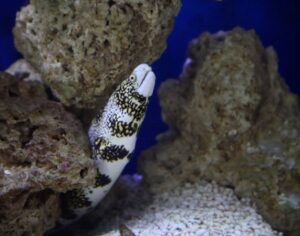
They can grow quickly in a rather short period of time, so it is reasonable to get large tanks in the first place. A 50 gallon or larger aquarium is necessary for snowflake eels to live. Since they like to hide in rocks, providing plenty of rock in the tanks will help them adjust to your aquarium they also enjoy caves.
Diet & nutrition
Carnivorous. The main foods in the sea are crustaceans like krill, shrimp and they also have fish that fit in their mouths. Crabs and lobster are also their natural diet. In the wild Snowflake Eel is a nocturnal predator, ambushing fish and crustaceans. In the tank, it will take frozen or freeze-dried krill, fish, shrimp, and most meaty foods enriched with vitamins. It can be taught to be feed by hand, although this could be done with caution it is not recommended how they can inflict a painful bite and poor eyesight. Long tweezers or tongs can be used to feed them.
Unless already acclimated to frozen foods, the moray eel will likely need to be fed with live ghost shrimp when first acquired. Avoid feeding them goldfish or rosy reds because this is known to cause liver disease.
Determining sex
Snowflake eel could be androgynous. Also there is no distinguishable difference between sexes. In the same environment, more dominant eel will change from female to male, meaning that they are protogynous also. However, this process can take a long time.
Breeding & spawning
Snowflake eels are egg scatterers that produce eggs often in midwater mating rituals. Their eggs and larvae drift with plankton in the water column and settle back onto a reef at about the time of hatching. That's why spawning is very hard in captivity for snowflake eels.
Snowflake eels are protogynous, meaning the more dominant eel will change from female to male. Again this brings more issues, as eels are generally peaceful toward one another. Gender changing can take several months to years, which is far longer than most breeders are willing to wait.
Diseases
Snowflake eel is actually good at adapting to aquarium condition and kind of resistant to diseases.
Origination
Indian Pacific: From the Red Sea and East Africa to the Society Islands; south of Japan and the Hawaiian Islands in the north, Lord Howe Island in the south; Throughout Micronesia.
Eastern Pacific: Southern of Lower California, Mexico and Costa Rica to the north of Colombia.
It is also found in the Southeast Atlantic.
Cautions
Since they are good at escaping, it is important to seal the tanks well.
Snowflake morays are reef safe and will not bother corals, though these eels are messy eaters and will require strong filtration and a relatively large protein skimmer for the long-term health of any corals housed in their aquarium.
Acclimation process

All photos
Tap a photo to open the gallery viewer.